// Speculative. Critical. Culture-aware.
Huddersfield GD Graduate, 2026.
Available for hire.
 FADA — FMP 2026
Selected Work — 2024–26
Final Major Project · 2026
A speculative communication system designed to defeat facial recognition technology. Inspired by CAPTCHA logic, FADA creates a visual language with a hidden layer — only legible to humans holding a red-filter lens.


FADA — derived from a facial recognition screening failure code — is a speculative visual language for a future where surveillance technology is ubiquitous. The project asks: how do people communicate when every letter can be read by a machine?
"The text is visibly hidden from view. I made an extra layer only accessible by humans — the red/blue disguise which needed a red film to decipher. So I made the glasses."
Taking inspiration from CAPTCHA tests — systems designed to distinguish human from machine — FADA develops an anaglyph typography system where text is simultaneously present and hidden. The red layer is readable to machines; the blue layer, visible only through a red-filter lens, carries the human message.
The physical artefact — handmade red-filter glasses — becomes the key. Without them, the message is noise. With them, it reveals itself. The glasses were distributed at the grad show, making every viewer an active participant in the act of decoding.
At the 2026 Huddersfield Graduate Showcase, FADA was presented as a floor-to-ceiling large-format printed installation — over two metres tall — covered in the FADA visual language: red spray-painted graffiti layered over the structured anaglyph type system. Five sets of handmade glasses were displayed alongside the bound publication.
This project was awarded the External Examiner Prize 2026.
Dissertation Extension · 2025
A visual and theoretical extension of a dissertation on greenwashing, ecological hyperobjects, and the ethical responsibility of the designer within capitalist structures. Subverting the language of high-pressure retail advertising to expose the "just sheer noise" of corporate sustainability claims.


Just Sheer Noise began as an extension of a dissertation investigating how contemporary design strategies engage with ecological hyperobjects. Taking Ken Garland's description of consumer advertising as "just sheer noise" as its title and thesis, the project subverts the visual language of closing-down sales and discount retail to interrogate the contradictions of climate delay and techno-optimism.
"Design serves whoever pays for it." — The DELAY-CO receipt itemises the bibliography like a checkout slip: SUBTOTAL: STATUS QUO. TAX (GREENWASHING): 20%. VOID AFTER ECOLOGICAL COLLAPSE. KEEP RECEIPT FOR FUTURE AUTONOMY.
Presented as a tabloid newspaper — distributed free at the 2026 graduate showcase — the publication layers academic dissertation text beneath an assault of retail graphics: sale stickers, price tags, 99p badges, closing-down bursts. The academic content becomes almost illegible beneath the noise, which is exactly the point.
The "Greenwashed Pine" air freshener spread, the PolyFlakes cereal, and the DELAY-CO receipt all appear as speculative products embedded within the newspaper, blurring editorial and advertising in the same way that corporate sustainability discourse does.
Speculative Branding · 2025
A speculative breakfast cereal designed for a dystopian future where natural systems have collapsed. Future-Proof Nutrition. Shelf Life: Indefinite. Designed to Never Decompose.


PolyFlakes is a speculative product embedded within the Just Sheer Noise newspaper. It functions as a tangible critique of ecological hyperobjects and the myth of techno-optimism — presented as a breakfast cereal designed for a dystopian future where natural systems have collapsed, leaving only synthetic alternatives.
The branding mimics 1990s children's cereal packaging — bright stars, rainbow typography, smiling children — while the copy reveals its dark logic: Enhanced with Smythetic Flavouring. Designed to Never Decompose. Future-Proof Nutrition.
The cheerful aesthetics of consumer capitalism applied to ecological catastrophe. PolyFlakes doesn't critique from outside the system — it becomes the system, selling the collapse.
Social Design · Zine · OOH Campaign · 2025
By Your Side Since '79. A Sony × Spotify campaign and Alzheimer's Society zine celebrating the Walkman as a vessel for human memory — and music as a means of reconnection across generations.


Playback Sessions began as a response to a brief to make visible the value of a particular technology — the Sony Walkman. Through primary research including an interview with my mother about her Walkman Sport, the project pivoted from product campaign to social design.
"It created this little bubble where I was the main character. Those songs are tied to those specific moments on the road. Even though my hearing isn't what it used to be, those memories are still happy and vivid."
The campaign reframes the Walkman not as obsolete technology but as a lifelong companion. Working with research into music's impact on dementia — Alzheimer's Society, Age UK, Re-engage — the project develops a Sony × Spotify collaboration built around the concept of Independance: a portmanteau of Independence and Dance.
The OOH billboard series features real people dancing, headphones on, with the tagline NEVER LEFT — challenging the perception that people with Alzheimer's are "gone." The bubble-dot logo for "79" is directly informed by brain scan imagery showing how self-selected music reconnects neural pathways.
An authentic health zine — the antithesis of clinical NHS pamphlets — distributed at the grad showcase. The "Confessions of a Walkman" spread uses gradient typography to mirror the fading nature of memory, with handwritten copy drawing on the tactile quirks of the device: the mechanical click of Play, the tape wobble when you run, battery anxiety as the music slows.


Retro-Tec is a campaign designed around the concept of Independance — a deliberate portmanteau of Independence and Dance — reimagining how Sony × Spotify could empower older listeners navigating digital systems, using the familiar tactility of the Walkman as a gateway.
Research revealed that older audiences often feel alienated by minimal "flat" design, overwhelmed by streaming interfaces, and nostalgic for physical buttons and feedback. The campaign repositions the Walkman not as retro nostalgia but as a model of accessible, dignified design.
Campaign touchpoints include print posters, an event programme for "Independance Sessions" (silent discos / movement workshops in partnership with Age UK), and an editorial zine with mode-based colour coding: purples and oranges for Fast Forward / high energy; blues for Rewind / reflection.
Critical Design · Campaign · 2025
A visceral critique of performative environmentalism and the corporate co-opting of ecological crises. Visually translating how brands use the language of climate action as a commodity.


Every Brand is a Climate Brand is a critical design campaign embedded within the Just Sheer Noise newspaper. It targets the ubiquity of corporate greenwashing — the phenomenon Kazior describes as "every brand is a climate brand, and that's terrible for the environment."
The visual language mimics high-pressure retail promotional design — sale splashes, burst graphics, price tags — but applies them to ecological claims. EcoToken™: instant environmental impact. Plant a tree with every purchase. *tree allocation subject to availability. digital offset applied where necessary.
The work doesn't argue from outside the system. It becomes the system — selling sustainability the same way supermarkets sell cereal.
Health Campaign · App Design · 2025
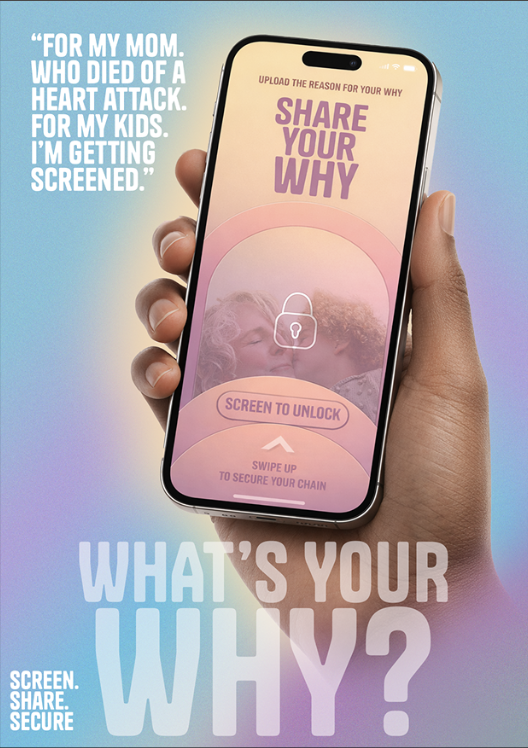
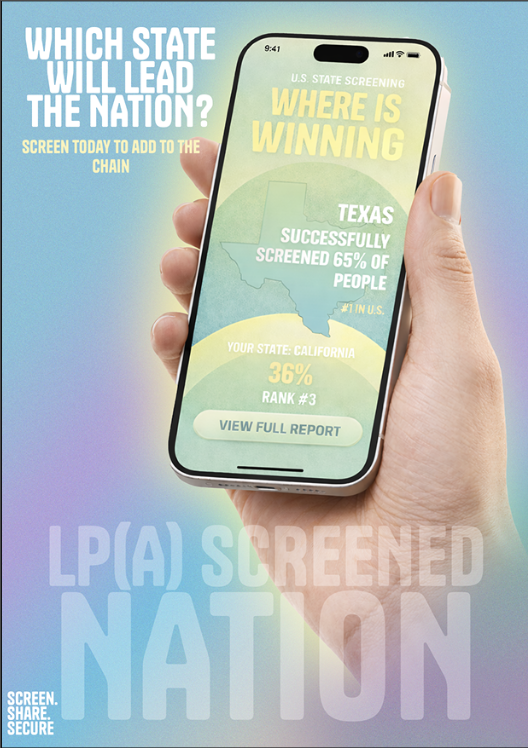
Make LP(a) screening a family affair. Turning an inherited risk into a viral mission — using the logic of chain letters and social sharing to drive cardiovascular health screening across generations.



Don't break the chain.
Screen · Share · Secure
Heart Check Chain is a public health campaign addressing LP(a) — a genetic risk factor for heart disease that affects approximately 20% of the population, largely undiagnosed. The campaign reframes screening not as individual medical responsibility but as a family act: a chain of care.
The visual identity draws on the logic of viral social sharing — chain letters, referral mechanics, "Share Your Why" — applying it to cardiovascular health. Your DNA is a chain. Don't let a hidden link be the weak one.
The app design uses a "Screen to Unlock" gesture as its core interaction metaphor, bridging the smartphone habit of unlocking a device with the act of unlocking health information. The OOH campaign features real people sharing their personal motivations for getting screened.
Moving Image & Animation · 2024–26
Moving image & animation work — 2024–26
I'm a graphic designer who graduated from the University of Huddersfield in 2026, where I was awarded the External Examiner Prize for my final year body of work.
My practice sits at the intersection of speculative design, critical theory, and visual culture. I'm drawn to work that has a point of view — that uses the tools of consumer culture to critique consumer culture, that finds beauty in discomfort, and that takes the designer's ethical responsibility seriously.
From anaglyph surveillance systems to Alzheimer's zines to dystopian cereal packaging, my work asks what design is for — and who it serves.
I'm currently available for hire and open to opportunities in branding, campaign design, editorial, and speculative design.